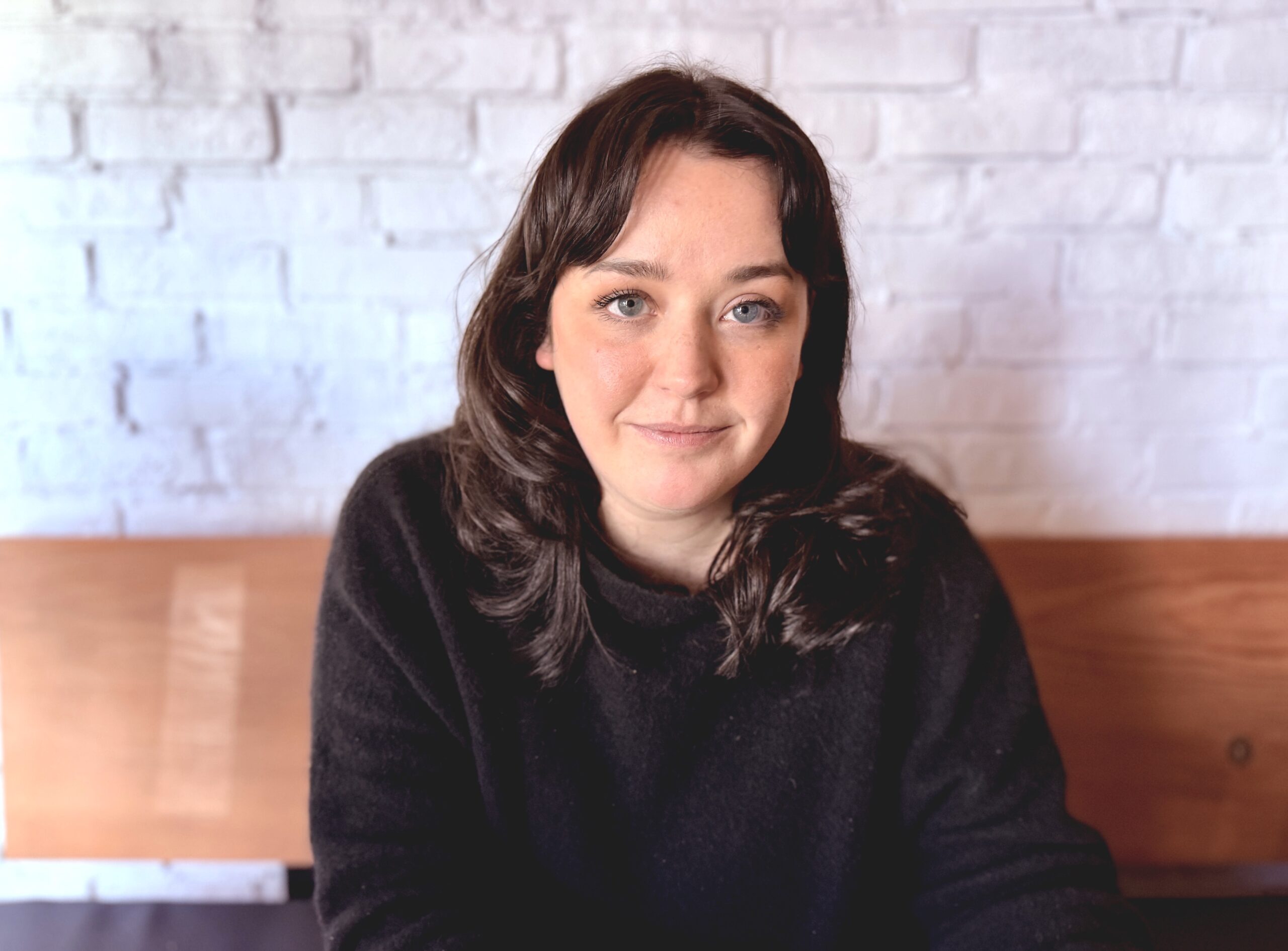

Spend a few minutes talking with Burdock & Co’s Wine Director Maisie Ryan and it becomes clear she knows her stuff, but has no interest in performing it. There’s no appetite for stiffness, gatekeeping, or over-explaining. What matters is trust. Letting people in. Leaving room for surprise. Making sure everyone at the table is actually having a good time. She also spends one day a week over at Dachi, another room with a serious wine program, not a coincidence.
Ryan has only been wine director at Burdock for a year, but just picked up a major nod at the 2026 Vancouver International Wine Festival Trade Competition, where the Michelin-starred restaurant took Gold for Best Micro Wine List. It’s the kind of recognition that usually signals polish and precision, but that’s not how Ryan rolls. Sure, the technical knowledge is there, but it’s not the point. The point is the room, the read, and knowing when to step back.
That approach will be on full display March 23, when Ryan joins Chef Andrea Carlson, alongside Chef Katy Cheung and Sous-Chef Kyumin Kim, to host a tightly curated winemaker’s dinner with Mark Haisma, built around a small-production Burgundy lineup that’s not easy to come by. She’s currently in the thick of it, sourcing bottles, shaping pairings, and getting ready to bring it all to life on the floor.
We caught up with Ryan mid-prep to talk about her approach to wine, service, and keeping things just loose enough to make it all work.
Set the stage for us, where did you grow up?
I grew up in Bowmanville, Ontario, close (ish) to Toronto.
When did you start working in restaurants? I started working in restaurants at 16, where my parents lived at the time in Port Hope, Ontario, at the Beamish House Pub (still there and frequented by my parents). I was a server, among a group of very well-established older servers, who all still work there to this day. They were great. At the time we handwrote every chit and bill. When I moved to Toronto at 17, I started working at a Fox and Fiddle downtown, a family friend who worked in restaurants got me the job. At some point, I ended up bartending at Boxcar Social in the financial district, where I learned about wine for the first time, outside of my mom’s usual beaujolais and ‘chicken wine’ (delicious and affordable rosé from the Rhone valley).
How did you end up in Vancouver, and where was your first Vancouver job? I moved here in early 2021 because, like many, I felt called to leave Toronto during the pandemic. I drove here, having never been before. My first job was at Bacaro as part of the opening team. At the same time, I worked for Tara Davies at Chupito and later Cantina 189, followed very shortly after by Dachi. I was working at all 3 for a time.

How long has wine been your focus? To be fair, not that long. I really threw myself into it around 2020. But I tend to go all in when something grabs me. I’ve always been like that. But I had some lucky breaks along the way. I ran into people such as Miki Ellis (Dachi) and Sarah Doerksen (Dachi) and Kelcie Jones (This is Wine School) before I really knew anything. Working with people like them changed everything. They inspired me, and took time to teach me, giving so freely of their time and knowledge. They made me want to learn.
You’ve landed at Burdock have obviously hit your stride, but did it feel that way at the beginning? When I first got this job my immediate reaction was: I’m not deserving of this title. But curiosity helps, and I’m always building knowledge through curiosity. And Burdock is a place where Chef (Andrea Carlson) really encourages us to do what excites us. She wants us to push things a little. Try fresh ideas. There isn’t an expectation that we must follow a classic structure and know everything there is to know. We use our knowledge as a foundation that allows us to look at wine and pairings in a way that asks not “what would be the perfect by-the-book pairing” but more like: “What might be playful, challenging, interesting or unexpected given the flavour profiles of the dish.
That approach seems to work because diners already trust the room. Exactly. When people walk into Burdock, they trust that we know what we’re doing. Restaurants in general work on that, but Chef Andrea especially has created that environment. She’s always done something a little different. So guests arrive with that trust already there. Dachi is similar. The tone is essentially: trust me, here’s what you’re having. And honestly, as a diner, that’s the fun part: Stay open. Be surprised. People still want to choose specific wines sometimes and that’s fine. But most guests are excited to try something new, especially if a whole team is encouraging it. It’s important to leave room for discovery. It’s more interesting when people see connections themselves.
That feels like a gift for diners. I think so. Preference still matters, but the approach becomes more about discovery and conversation. More “isn’t this cool?” Less technical explanation, more story.
You also don’t seem interested in overwhelming people with formal information that might typically be expected in a Michelin Star dining experience. All the technical details are there in my head if someone wants them, but nine times out of ten they don’t. The story is what people remember.
You’re also pretty good at convincing people to try things they say they don’t like. That happens a lot. Especially with saké (Ryan includes saké in pairings fairly often). If someone says they want the pairing, but they don’t like sake, and a third of the pairing is sake, my first thought is: I spent a lot of time building this. Replacing two of six doesn’t feel thoughtful. But I’ll still work with them. It’s exciting when the diner is willing to put their preconceived ideas aside and give something a try. Even better when they are won over.

Do you remember the BC wine that first made you fall for BC wine? Yes. My answer never changes. St. Katharina Vineyard Blanc de Noir, traditional method. It’s the best BC wine I’ve ever had. The winemaker, Jordan Kubek, only makes about 1,200 bottles a year. I’m fairly certain I buy most of what comes to Vancouver, because it’s that good. I first had it at Dachi. It’s such a special project. It’s really about the biodiversity of the landscape, not about building a big brand. It’s not even under her own winery name. It’s under the vineyard’s name. I always list it next to a Champagne, and often people prefer it. It’s just incredible.
What was the last glass that made you think you needed more of it? I was recently at Elisa and I decided to order a slightly ridiculously priced Coravin (Elisa is a good place to do that) – a Roagna Timorasso. It was unbelievable. A producer I’ve been obsessed with for years, originally because one of my other mentors Jesse Walters was obsessed with them. It was about $70 for three ounces and absolutely worth it.
What wine myth would you happily retire? That red wine should be room temperature and white wine should be freezing cold. More whites should be warmer. More reds should be properly tempered. Guests sometimes think the wine is the wrong temperature when it isn’t. So I keep different bottles ready at different temperatures. Fridge, shelf, everything. But I’m hoping people will be open to trusting.

If you could work one harvest anywhere in the world, where would it be? Barbacán in Valtellina, northern Italy. I love their wines. They’re a funny, slightly chaotic place, and the mountain vineyards are so steep that outsiders can’t really participate in harvest. They won’t let you. If they ever did, I’d go immediately.
Your philosophy about service seems to go beyond wine. Totally. I think a lot about how dining feels right now. I’m pretty over fussy dining. You build certain places up in your mind and then the experience becomes so choreographed that it’s hard to relax. For me restaurants are about connection. If you’re concentrating on the experience around you and how it is supposed to feel, you lose your own experience. You can’t connect with the people you’re with. I think people are tired of that. We want to have a good time. That definitely influences how I approach service: let’s have some fun!
So the deeper your knowledge becomes, the less interested you are in performing it? Yes. If I didn’t have the foundation, I might feel like I was bullshitting. But because I do understand wine, I don’t feel the need to hold onto it so tightly. If I don’t know something, I’ll learn it. And honestly, guests teach me things all the time. I’ll hear something and think, that’s so cool — I’m telling everyone that now. That curiosity is what keeps the job fun. At Dachi, a lot of the guests are big wine enthusiasts, so many of the guests have travelled to these wine destinations and have much to share. Some of our regulars went to Valtellina recently and told us that the older, more ‘classic’ leaning producers, which many in the region are, kind of turn their noses up at Barbacan because they are doing something different, which only made me like them more.
Burdock is doing this dinner with Mark Haisma, and he only makes about 1,000 cases a year. From a wine director’s point of view, how hard was it to actually get your hands on the bottles? Well, it wasn’t easy. Three of the six I couldn’t order because they were sold out, so I had to get creative. Some came off the shelf at a BCL on the North Shore after someone tipped me off on where to go and made it clear I had to go that day or they would be gone, there are only a few left. So yes, I had to jump through a few hoops. And he doesn’t make dessert wine, so the dessert pairing is from Roussillon, and chosen by Haisma. It’s an oxidized Grenache Blanc. Very raisiny. It’s going to be spectacular.
When you work with Chef Carlson on a wine dinner menu, what does that collaboration actually look like? It’s an epically collaborative process, which is always great. But normally, I’m building the pairings towards the menu, and then we refine things together. In this case, because I had such a limited selection, there wasn’t much room to adjust on my end. So we sat down, went through the wines one by one, and Chef built the menu around them. That’s not typical, but it was worth it to turn the process upside down for this winemaker, and it was really fun to work that way.
Let’s address the elephant in the room. Even at the revised price (298), this dinner is still a serious financial commitment. Why is it worth it? For me, dinners like this are about access. You’re getting bottles that are difficult to find, and you’re experiencing them in a context that’s been thought through very carefully. It’s not just drinking something rare. It’s having it alongside a menu that’s built for it, in a room where people are genuinely excited to share it with you.

Is there one bottle on the lineup that you think might quietly steal the show? I think the Aligoté will. People think of Burgundy and immediately think of Chardonnay. There isn’t a lot of Aligoté being consumed at the same level, even though wine directors love it. It’s high acid, a bit of an underdog. People are always looking for something a little different. Chardonnay isn’t going anywhere, but as things shift, Aligoté is starting to come forward. It was my favourite in the lineup. Shocking and delicious. I think people who come open-minded are going to be really excited to discover it.
WINEMAKERS DINNER
The dinner takes place March 23 at Burdock & Co, with tickets available through OpenTable here. Expect a focused, small-run Burgundy lineup from Mark Haisma, whose wines rarely show up in this kind of setting. Seats are limited


There is 1 comment


Main Street

Burdock & Co Returns to Its Neighbourhood Roots with New Walk-In Bar Menu

The Salty Magazine Dinner Series Presents: Burdock & Co x Passage

The Team Behind Award-Winning Chupito Cocteleria Introduces Cantina Social Club

Published on Main Unveils Their 2026 Flourishing Tasting Menu

The Acorn Restaurant is Seeking a Sous Chef

Flowers Play The Starring Role in Burdock & Co’s New Tasting Menu
Popular

7 Road Trip Stops Worth the Detour This Summer

Ultramar Set to Open in Mount Pleasant This Winter

From Lighting Charcoal to Reading the Fire: Pete Ho Schools Us on Grilling
Burdock & Co Returns to Its Neighbourhood Roots with New Walk-In Bar Menu

How Restaurants Change: Thoughts on The New Direction at Les Faux Bourgeois


Interesting take on service. It’s refreshing to see a focus on storytelling instead of just traditional etiquette. How do you think it changes the guest experience?